Realistic workplace moments. Safe behavioural rehearsal.
- Policies tell people what's expected. This program builds the capability to actually do it.
Before we learn power skills, we start with human skills.
- We start by helping build a confident workforce who that feels safe. Most psychosocial safety training teaches people what the rules are. The Reimagining Psychosocial Safety™ program does something different: it puts people inside realistic workplace situations. It builds their ability to recognise, respond to potential psychosocial harm situations before it happens in real life.
- We combine VR immersive learning with AI-enabled coaching to achieve lasting behavioural change. We address the compliance requirements of Workplace, Health and Safety legislation around workplace sexual harassment, bullying, discrimination, workplace conflict and other harmful workplace behaviours. Our goal is to ensure your organisation meets obligations around Positive Duty and Psychosocial Safety legislation.
- The Reimagining Psychosocial Safety™ program is evidence-based and designed to meet Australian WHS, anti-discrimination, Fair Work, and Towards Sustainable Mining (TSM) frameworks.
Psychological safety is built into the program before the headset goes on.
- Every participant begins with a confidential VR suitability prescreening to ensure a psychologically safe experience.
Inside the simulation.
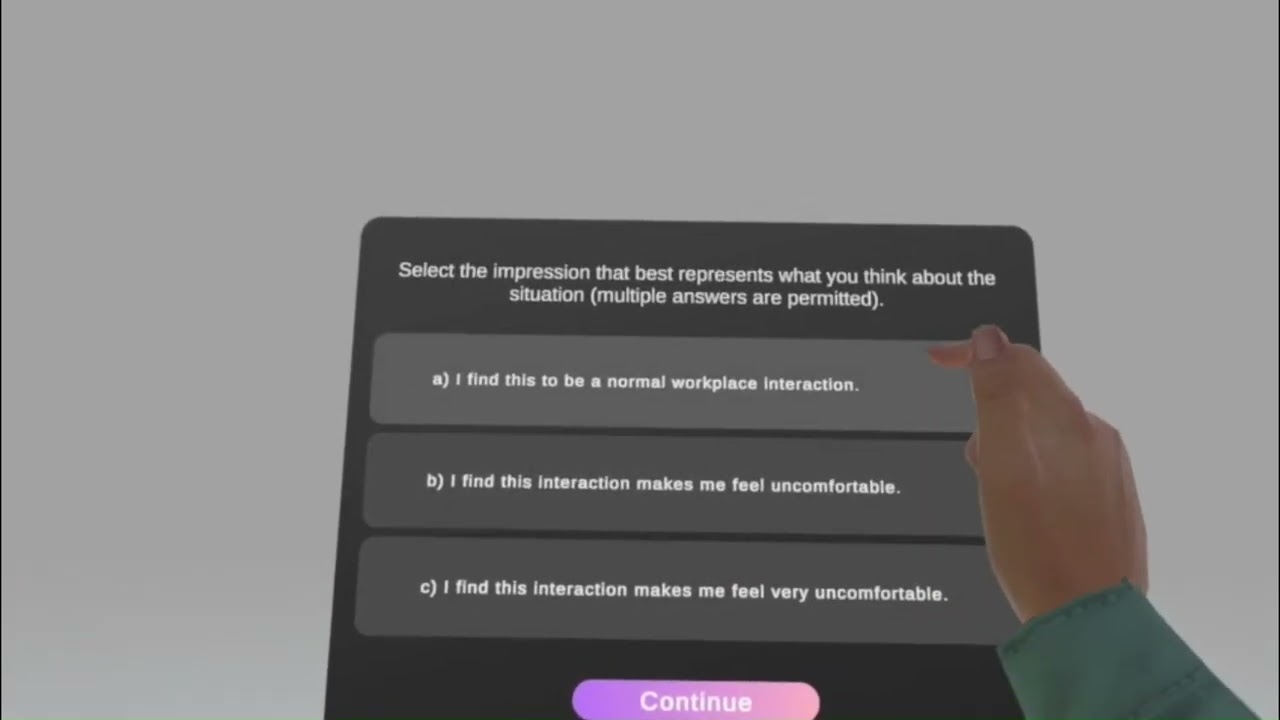
Our VR simulation places participants inside realistic workplace scenarios involving psychosocial risk. The goal is to develop situational awareness and build the muscle memory to respond effectively under pressure.
Participants observe, interpret, and practise responding to situations like:
- Disrespectful behaviour
- Discrimination
- Sexual harassment
- Inappropriate conduct
- Power imbalance
- Poor boundaries
- Workplace conflict
- Reporting uncertainty
After each scenario, Amanda, our AI Mining Coach, helps reinforce the learning by supporting participants' process, including what they observed, how they responded, and build their capability to respond better next time.
Video can’t be displayed
Designed for Operational Environments
Location: We come to you. On site
Duration: 90 minute sessions
Group size: Up to 25 per session
Who it's for: Frontline leaders, Supervisors, and people managers in mining and industrial operations
Follow-on support: Participants continue learning with Amanda, PowerSkillsAI's AI coaching companion, between sessions.
What Changes?
- Participants leave the program with:
- Greater confidence in recognising and naming psychosocial risk
- Practical capability to respond to harmful behaviour early, before it escalates
- A clearer understanding of their obligations and how to act on them
- The language to have difficult conversations they've been avoiding
Organisations gain real-time visibility into how their workforce responded via the PowerSkillsAi dashboard, so leaders can identify where additional support is needed.